Diodes
A diode passes current only from anode to cathode. Rectifier and signal diodes differ by current and speed; zener and Schottky by special behaviors. An LED produces light, while a photodiode converts light into current.
8 types3 groupsSymbol IEC
Rectification and signal
4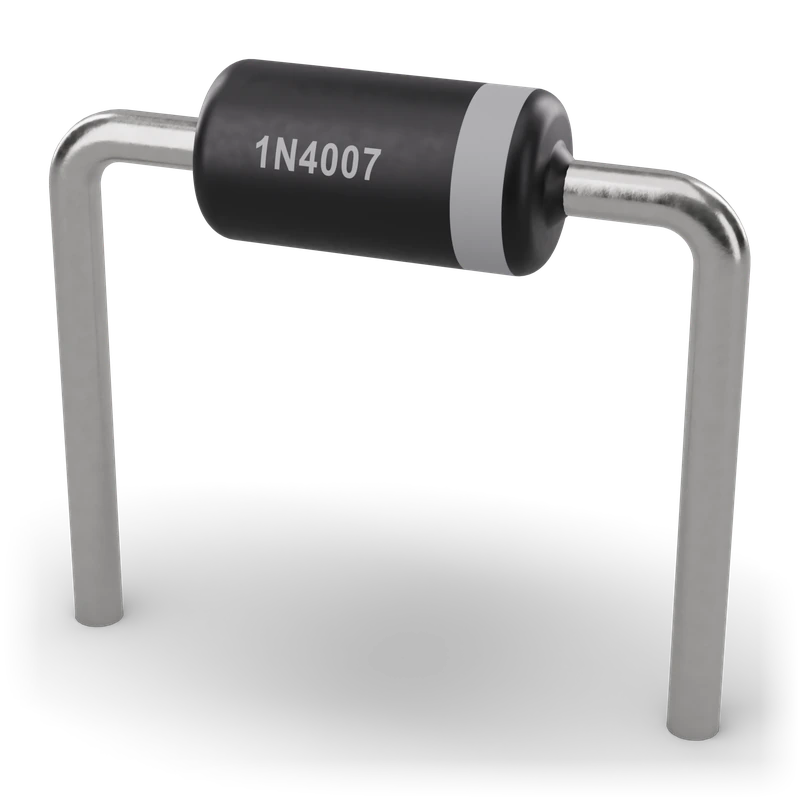
Rectifier diode (1N4007)Converting AC to DC, reverse battery and flyback protection
- Reverse voltage
- 1000 V
- Current
- 1 A
- Forward voltage
- ≤ 1.1 V
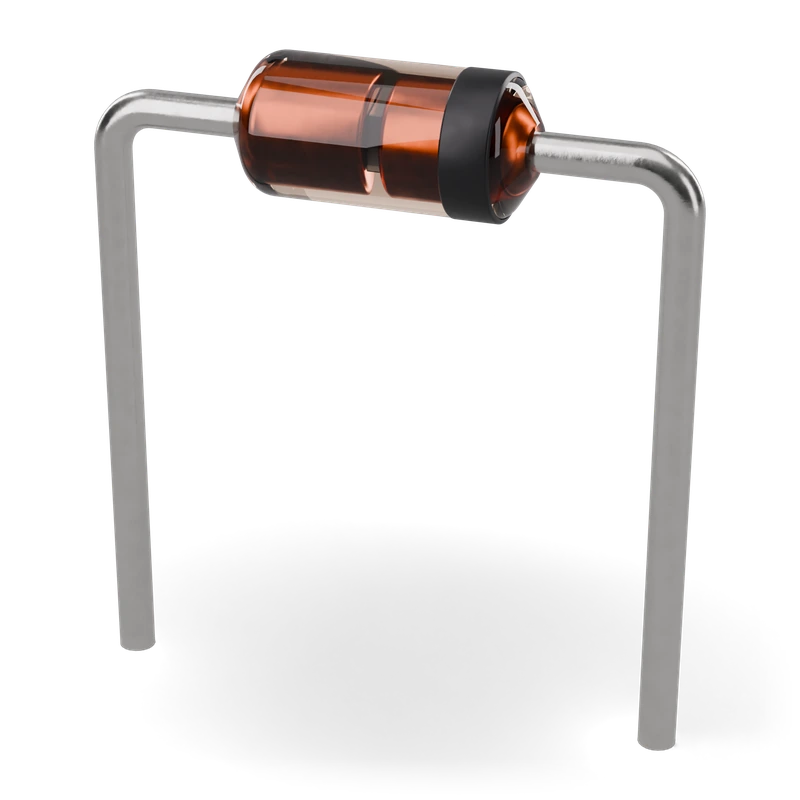
Signal diode (1N4148)Rectification and protection for fast, small-current signals
- Reverse voltage
- 100 V
- Current
- 150–200 mA
- trr
- ≤ 4 ns
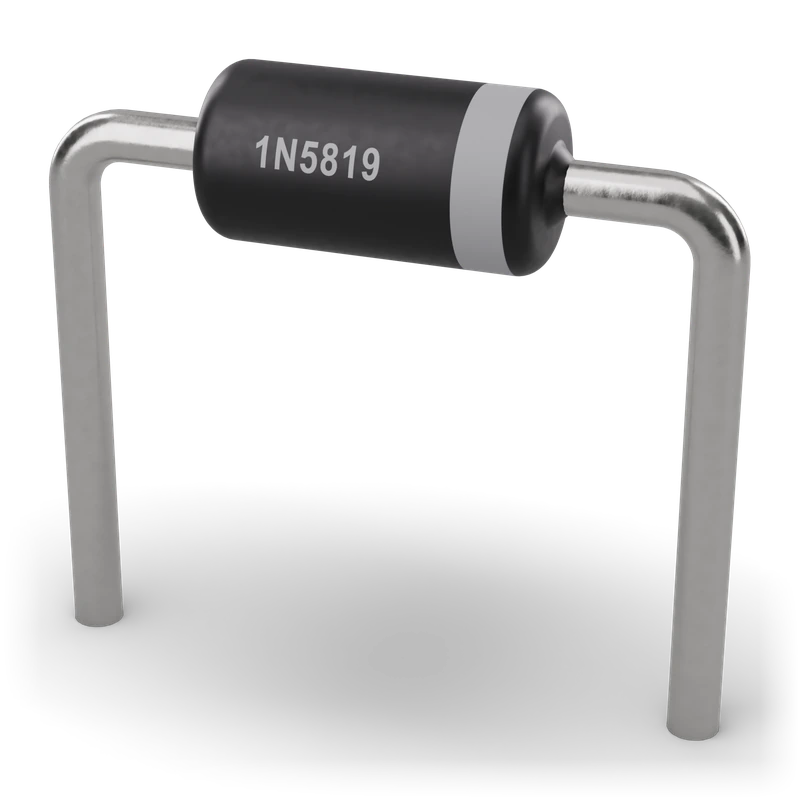
Schottky diodeFor low voltage loss: battery protection, switch-mode power
- Forward voltage
- ≤ 0.6 V (1 A)
- Reverse voltage
- 40 V
- Current
- 1 A
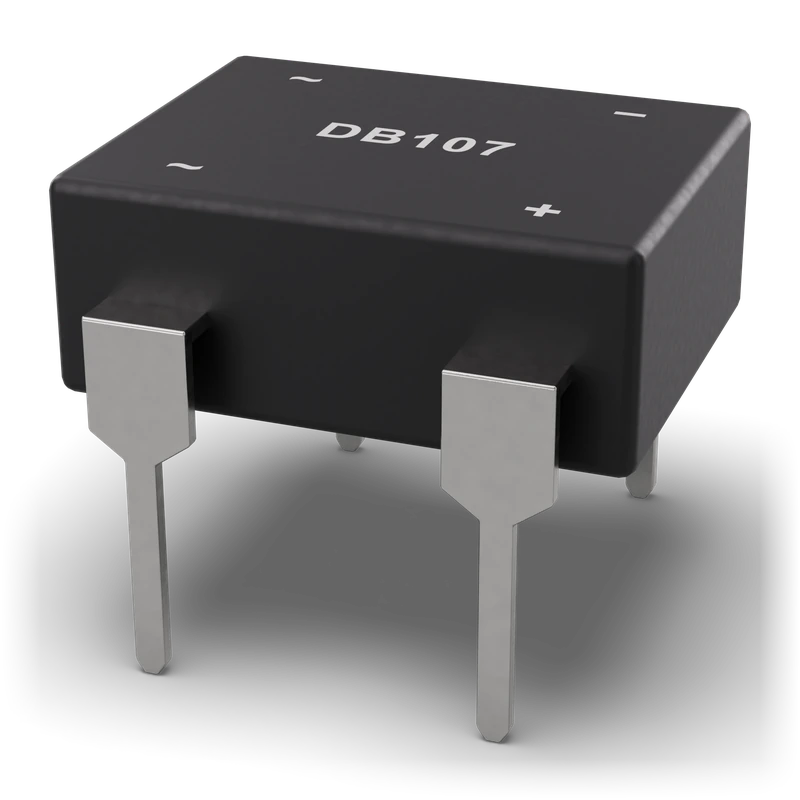
Bridge diodeConverting AC or unknown input polarity to full-wave DC
- Example
- DB107
- Current
- 1 A
- Reverse voltage
- 1000 V
Voltage clamping
1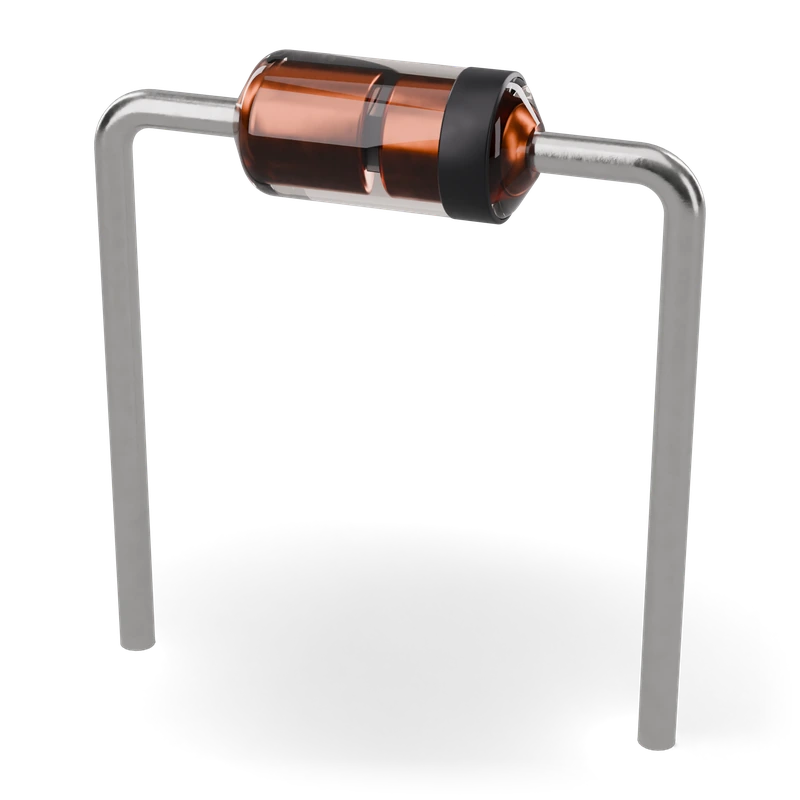
Light
3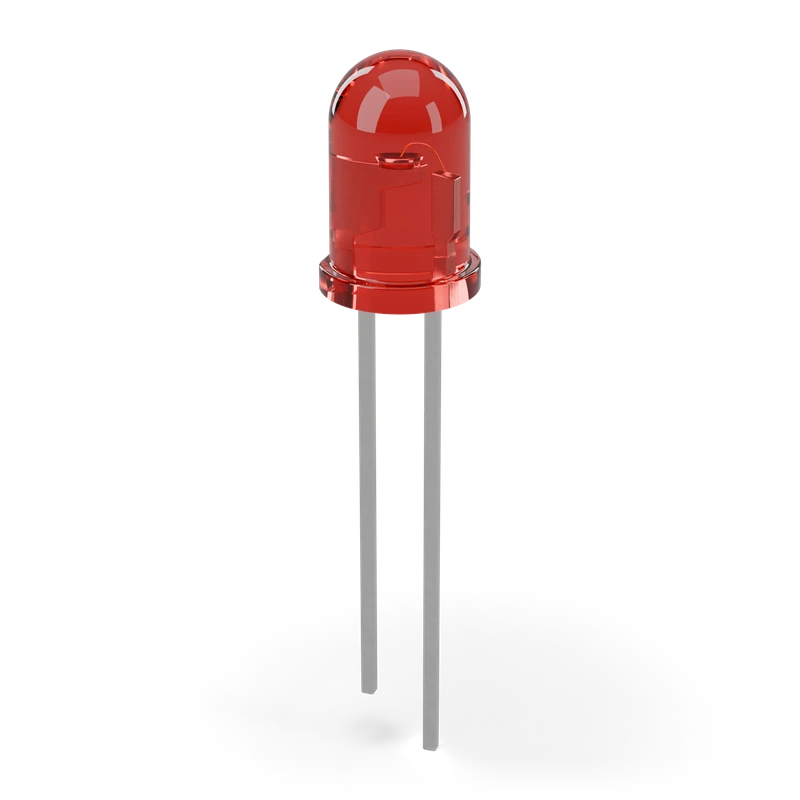
LEDIndicator light and lighting; a must for first circuits
- Forward voltage
- ≈2.0 V (red)
- Current
- 20 mA (max.)
- Reverse voltage
- max. 5 V
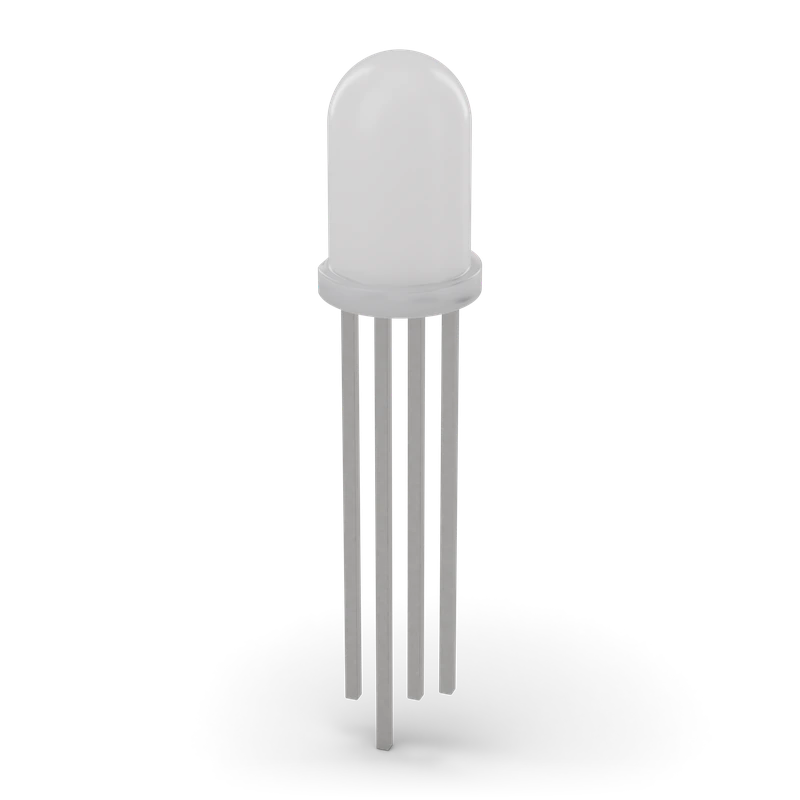
RGB LEDProducing any color from a single point, a colored status light
- Type
- Common cathode / anode
- Forward voltage
- R ≈2 V · G/B ≈3 V
- Current
- 20 mA / color
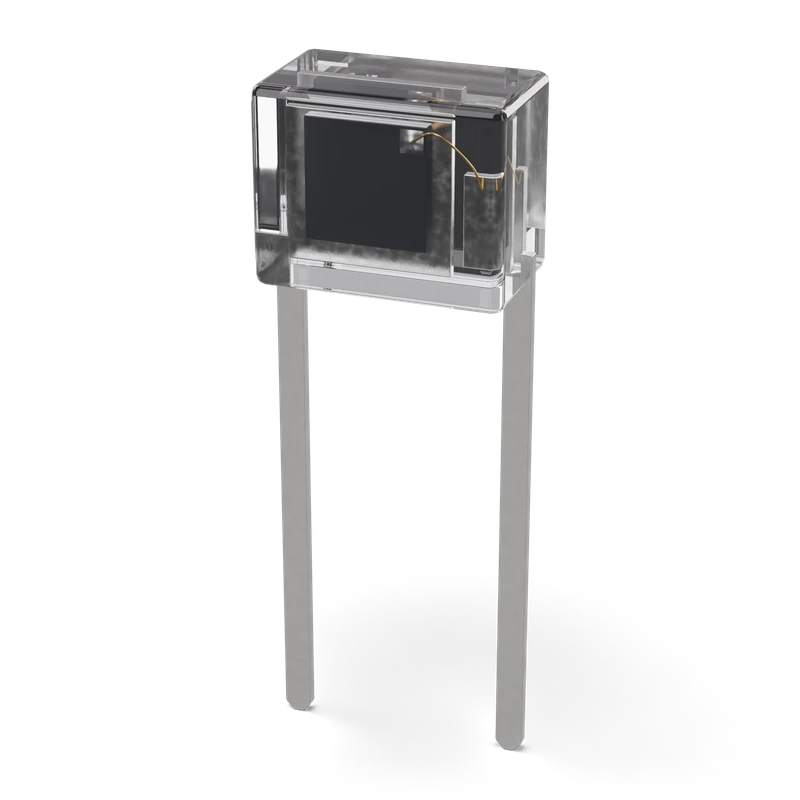
PhotodiodeMeasuring light quickly and linearly, receiving IR signals
- Example
- BPW34
- Reverse voltage
- max. 60 V
- Peak sensitivity
- ≈900 nm
Which one should I choose?
1
To convert AC to DC or use a flyback diode
Withstands 1000 V and 1 A, and is cheap.
2
If you are working with fast signals or logic circuits
Switches within nanoseconds.
3
4
If you want low diode loss in a battery circuit
The forward voltage drop is roughly half as much.
5
If you'll do full-wave rectification with a single part
Four diodes come already connected.
6
Compare8 types · 5 features
| Type | Forward voltage | Current | Reverse voltage | Speed | Typical use |
|---|---|---|---|---|---|
| Rectifier diode (1N4007) | ≤ 1.1 V (1 A) | 1 A | 1000 V | Slow | Converting AC to DC |
| Signal diode (1N4148) | ≤ 1 V (10 mA) | 150–200 mA | 100 V | Very fast (4 ns) | Signal, logic |
| Zener diode | ≈0.7 V (forward) | By power | Vz: 3.3–100 V | Minor | Voltage reference |
| Schottky diode | ≤ 0.6 V (1 A) | 1 A | 40 V | Very fast | Low-loss protection |
| LED | 1.8–3.3 V | 20 mA (5 mm) | 5 V | Minor | Indicator, light |
| RGB LED | R ≈2 V · G/B ≈3 V | 20 mA / color | 5 V | Minor | Color mixing |
| Photodiode | Gets connected backwards | µA (with light) | 60 V (BPW34) | Very fast | Light measurement, IR |
| Bridge diode | ≈2 × 1 V | 1 A (DB107) | 1000 V (DB107) | Slow | Full-wave rectification |
Datasheet values of example parts; vary by model.