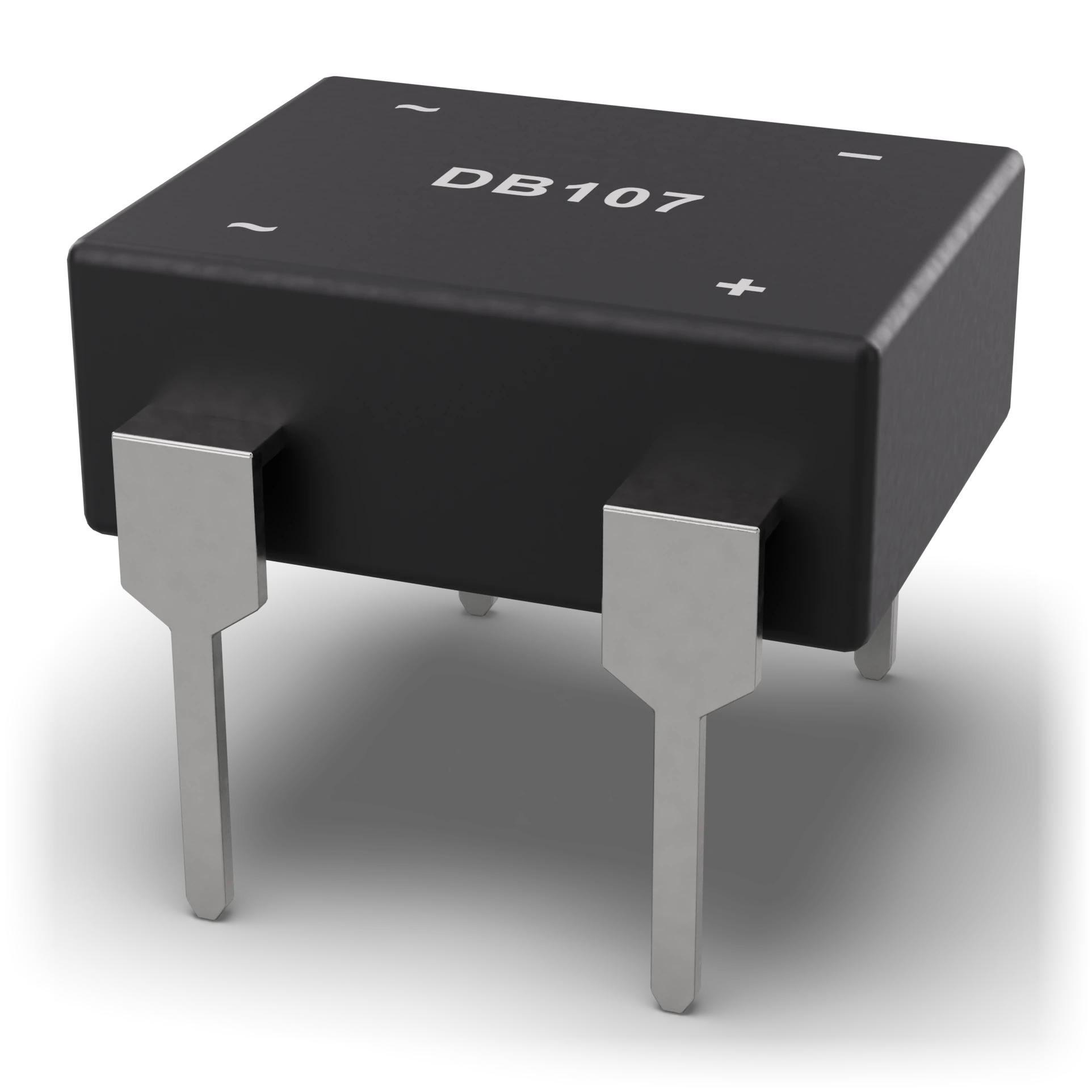
- 1Epoxy body (DIP-4) · DB107: 1 A, 1000 V
- 2~ + ~ − marks
- 3Pins: ~ ~ input, + − output
DB107: small DIP-4 body; high-current types have square metal or plastic bodies
Bridge diode
A bridge of four diodes in one body; whichever direction the current comes from, it always sends it the same way.
Converts alternating current into one-way current that devices can use.
Inside the power supply of adapters, chargers and audio devices.
A small square or flat black body with four pins; it has two AC marks, one plus and one minus printed on it.
Do not mix up the plus and minus pins; the two AC pins can replace each other.
Four diodes connected as a bridge in one package. Whatever the direction of the input voltage, the positive output always comes out of the same pin. Because current passes through two diodes while conducting, about two diode drops of voltage are lost.
IEC 60617: the drawing style used in Türkiye and Europe.
- Max. reverse voltage
- 1000 V (DB107)
- Average current
- 1 A
- Voltage loss
- ≈2 × 1 V (two diodes)
- Streak
- DB101: 50 V … DB107: 1000 V
- Ripple frequency
- 2 times the input (50 Hz → 100 Hz)
- Warning
- Mains voltage is outside this app's scope
- Example part
- DB107 (1 A, 1000 V)
Test with a multimeter
Test whether this part is good with the multimeter on the measurement screen.
Take a measurement