Transistors
A transistor switches or amplifies a much larger current with a small current or voltage. BJTs are driven by base current, MOSFETs by gate voltage. N types suit switching the minus side of the load, P types the plus side. An optocoupler passes a signal with light isolation; a triac, unlike a transistor, is a thyristor that switches AC current in both directions.
8 types4 groupsSymbol IEC
BJT
3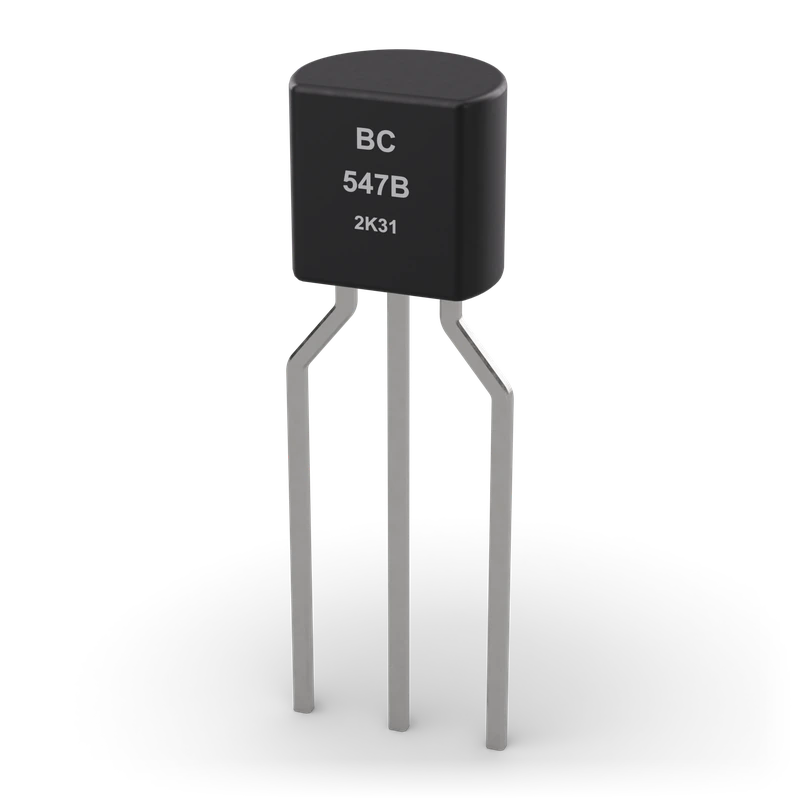
NPN BJT (BC547)Switching loads under 100 mA from a pin, amplifying small signals
- VCEO
- 45 V
- IC
- 100 mA
- hFE
- 110–800
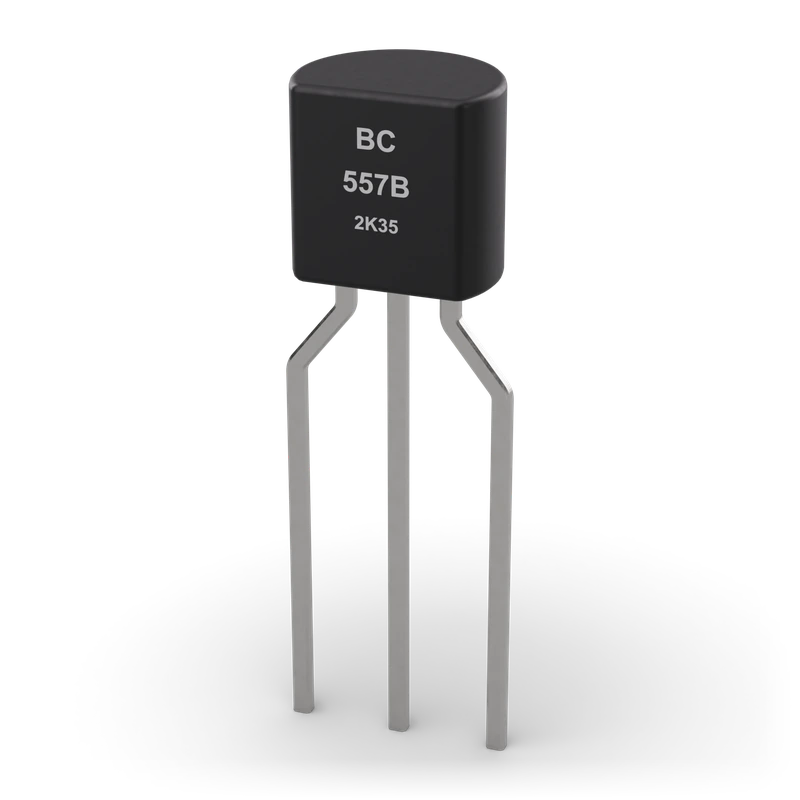
PNP BJT (BC557)Switching the plus side of the load; the complement of the NPN
- VCEO
- −45 V
- IC
- −100 mA
- hFE
- 110–800
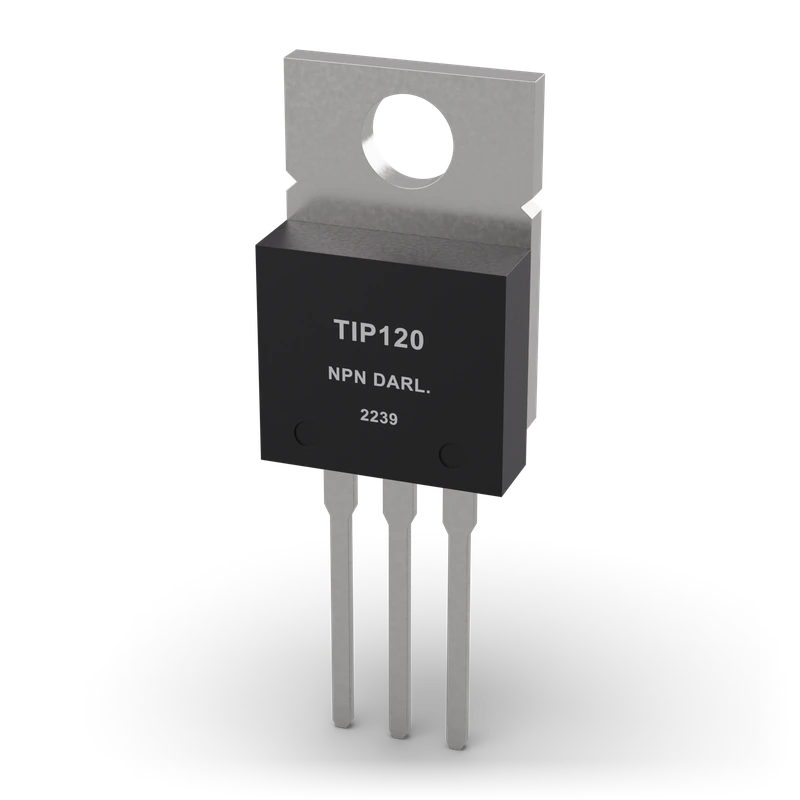
Darlington (TIP120)Driving an ampere-level load with a small base current, when efficiency is secondary
- VCEO
- 60 V
- IC
- 5 A
- hFE
- ≥ 1000
MOSFET
2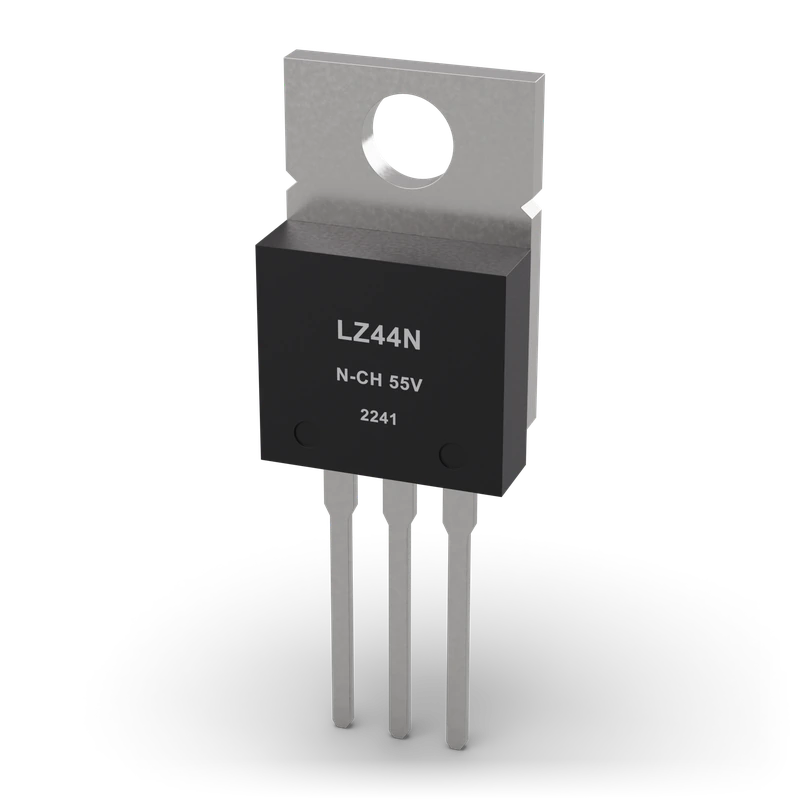
N-channel MOSFET (2N7000 / IRLZ44N)A voltage-driven switch: from a small signal to a motor and LED strip
- 2N7000
- 60 V · 200 mA
- IRLZ44N
- 55 V · 47 A
- RDS(on)
- 25 mΩ (5 V)
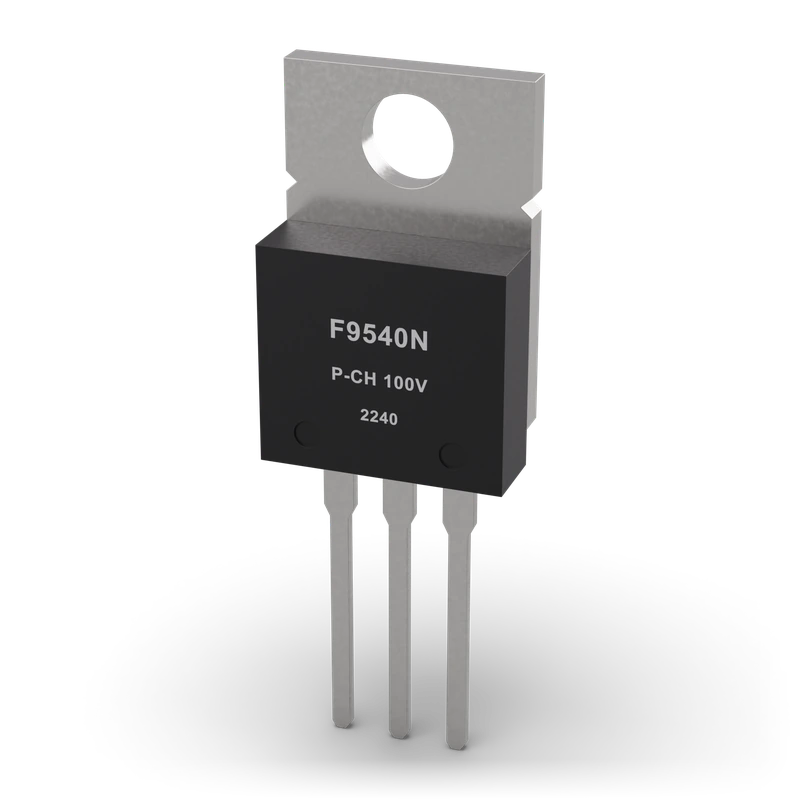
P-channel MOSFETSwitching the plus side of the load, reverse battery protection
- Example
- IRF9540N
- VDS
- −100 V
- ID
- −23 A
Light-powered
2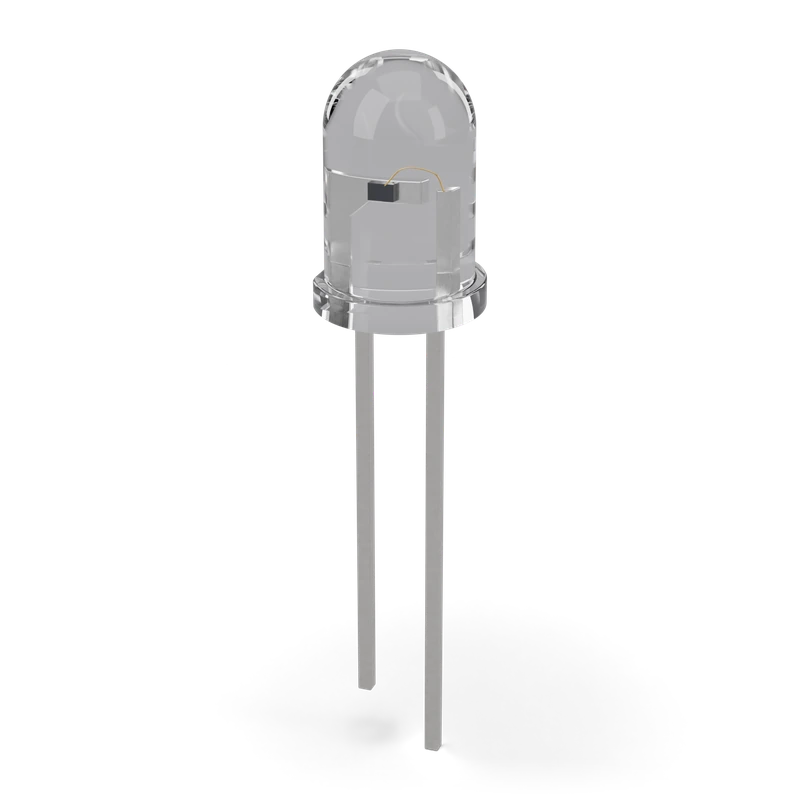
PhototransistorSwitching when light arrives or is cut: optocoupler, beam sensor
- Driving
- Light (instead of the base)
- Output
- From µA to mA
- Speed
- µs level
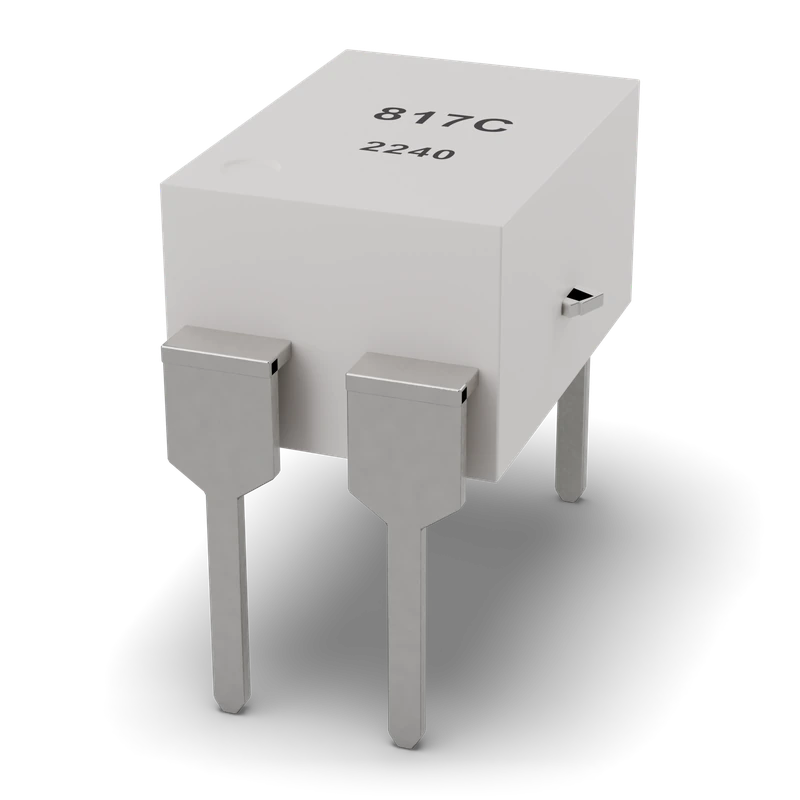
Optocoupler (PC817)Passing a signal without electrically joining two circuits
- CTR
- 50–600%
- LED current
- 50 mA absolute max.
- Insulation test
- 5 kV RMS
AC switching
1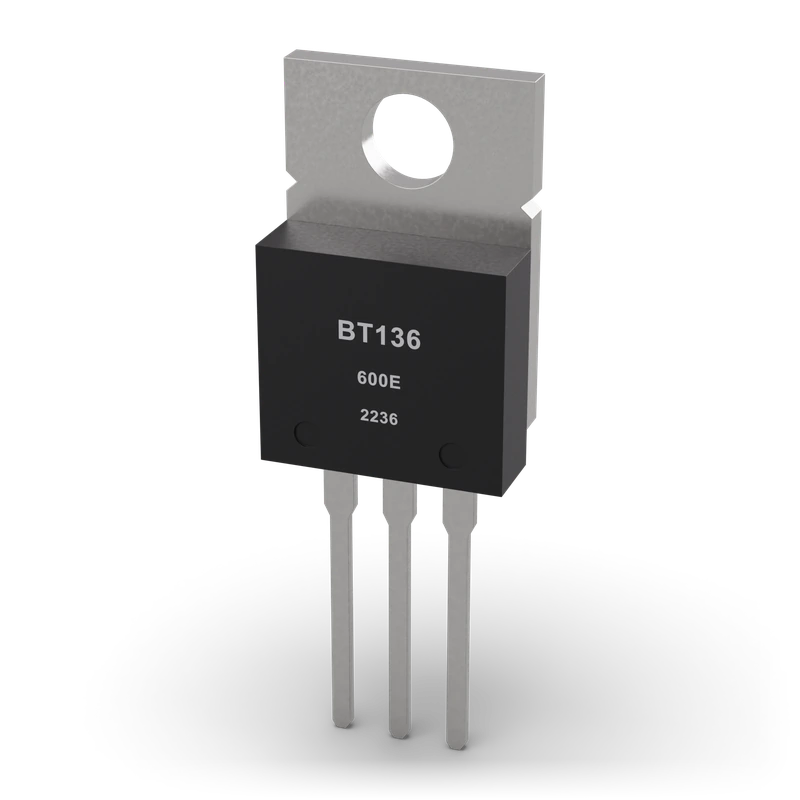
Which one should I choose?
1
If you are driving a load under 100 mA from a pin (LED, buzzer)
Cheap, simple; one base resistor is enough.
2
If you will switch the positive side of a small load
The emitter goes to positive; it conducts when you pull the base down.
3
To switch several amperes with little heating
A logic-level MOSFET has a very low on-resistance.
4
If you need to switch a large load on the positive side
Source stays at plus; it turns on when the gate is pulled low.
5
For amp-level loads with a simple driver, when efficiency matters less
Its gain is very high, but it costs 1–2 V.
6
7
If you'll pass an isolated signal between two circuits
Transfers by light; no conductive connection between input and output.
8
To switch an AC load in both directions
Triggered by the gate, it turns off when the current falls below the holding current.
Compare8 types · 5 features
| Type | Type | Max. voltage | Max. current | How to drive it | Typical use |
|---|---|---|---|---|---|
| NPN BJT (BC547) | BJT, NPN | 45 V | 100 mA | Base current (with resistor) | Small load switch |
| PNP BJT (BC557) | BJT, PNP | −45 V | −100 mA | By pulling the base down | High-side switch |
| N-channel MOSFET (2N7000 / IRLZ44N) | MOSFET, N-channel | 60 V · 55 V | 0.2 A · 47 A | Gate voltage | Motor, LED strip |
| P-channel MOSFET | MOSFET, P-channel | −100 V (IRF9540N) | −23 A (IRF9540N) | By pulling the gate down | Positive side, high current |
| Darlington (TIP120) | Darlington, NPN | 60 V | 5 A | Very small base current | Motor, solenoid |
| Phototransistor | BJT, light-controlled | Depends on the model | mA level | Light (instead of the base) | Optocoupler, sensor |
| Optocoupler (PC817) | Optical isolation, NPN | 80 V VCEO; 5 kV isolation test | 50 mA absolute max. | LED current, series resistor | Isolated signal |
| Triac (BT136) | Bidirectional thyristor | 600 V | 4 A RMS | Gate current, relative to MT1 | Low-voltage AC switch |
Values belong to sample parts (BC547, BC557, 2N7000 · IRLZ44N, IRF9540N, TIP120).