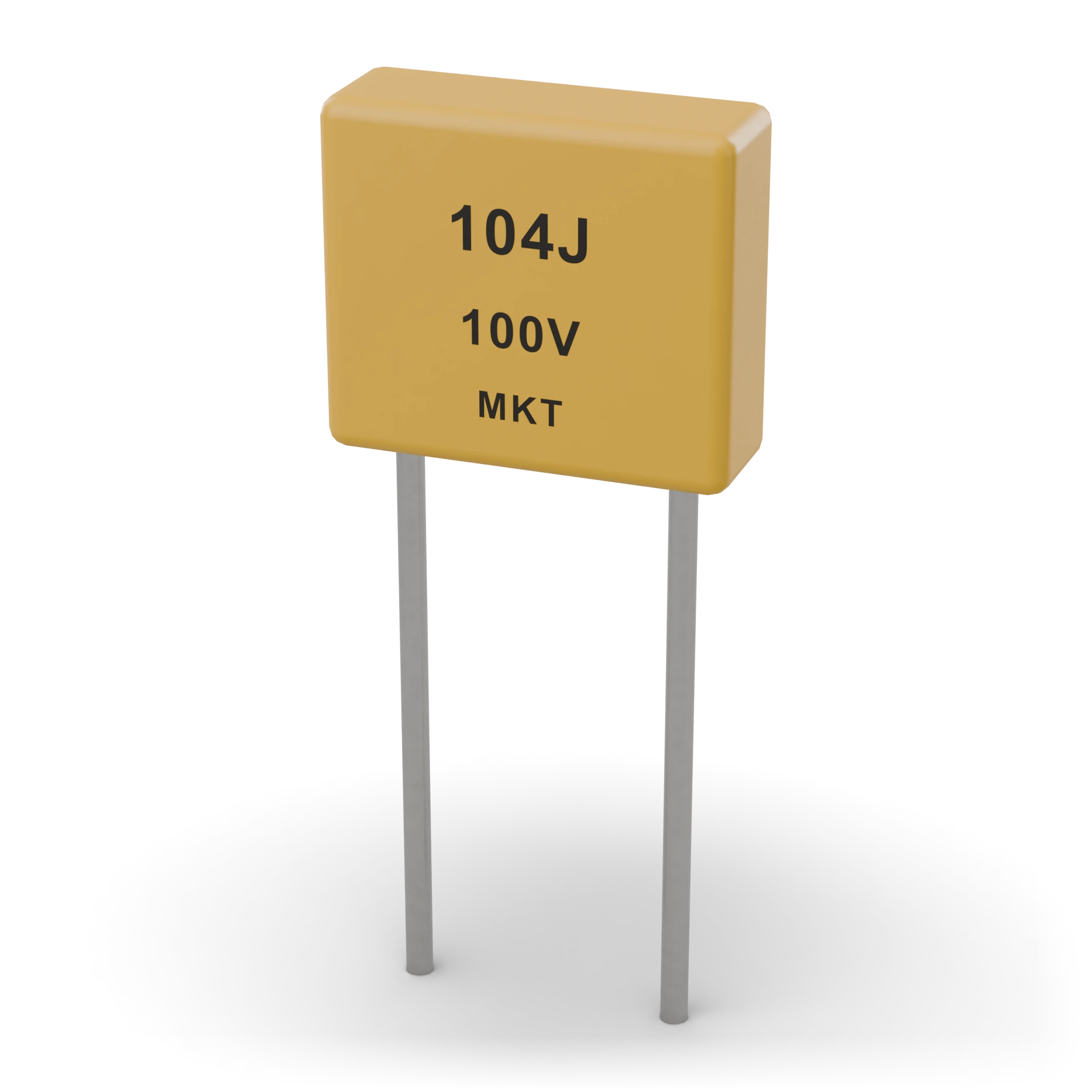
104J = 100 nF ±5%Plastic case (PBT) · 7.2 × 2.5 × 6.5 mmPins · 5 mm spacing
- 1104J = 100 nF ±5%
- 2Plastic case (PBT) · 7.2 × 2.5 × 6.5 mm
- 3Pins · 5 mm spacing
Red or yellow rectangular box, or green drop body, with the “2A104J” code on top
Varies with the value; 100 nF box type is a few mm, lead spacing 5 mm
Varies with the value; 100 nF box type is a few mm, lead spacing 5 mm
Film (polyester/polypropylene)
In simple terms
What is this?
A stable capacitor made with plastic film; a calm, reliable bucket.
What is it for?
It keeps its value in timing and audio circuits; the tone and the duration do not drift.
Where do you see it?
In audio amps and timing circuits.
How do you spot it?
A small box with two legs; a code made of letters and numbers is printed on it.
Caution:
Do not use it as a substitute for an electrolytic; its value is much smaller, so read the code on it correctly.
Technical definition
A non-polarized capacitor made by winding a thin metal-coated plastic film (polyester or polypropylene). Its value changes little with temperature and voltage, and its loss is low. It is larger than ceramic but more stable.
Capacitance100 nF
Voltage100 V
PolarityNone
Schematic symbol Same in IEC and ANSI
IEC 60617: the drawing style used in Türkiye and Europe.
Pins 2
1Pin 1Has no direction1
2Pin 2Has no direction2
Features typical
- Capacitance range
- 1 nF – 10 µF
- Voltage
- 63–630 V
- Tolerance
- ±5% (J) · ±10% (K)
- Polyester
- Small, cheap, general-purpose
- Polypropylene
- Very low loss; audio and pulses
- Self-healing
- Available in metallized types
- Warning
- X2 types are for mains; mains is outside this app's scope
- Example part
- 2A104J (100 nF, 100 V, ±5%)
Common mistakes
Reading the code wrongThe “2A104J” on the body says: 2A = 100 V, 104 = 100 nF, J = ±5%.
Using it in place of an electrolyticA film capacitor has a large volume per µF. It is not suitable for supply filters that need hundreds of µF.
Test with a multimeter
Test whether this part is good with the multimeter on the measurement screen.
Take a measurementWhere it is used
555 timing capacitorAudio coupling and tone circuitRC filterSuppressing motor noise
Related lessons