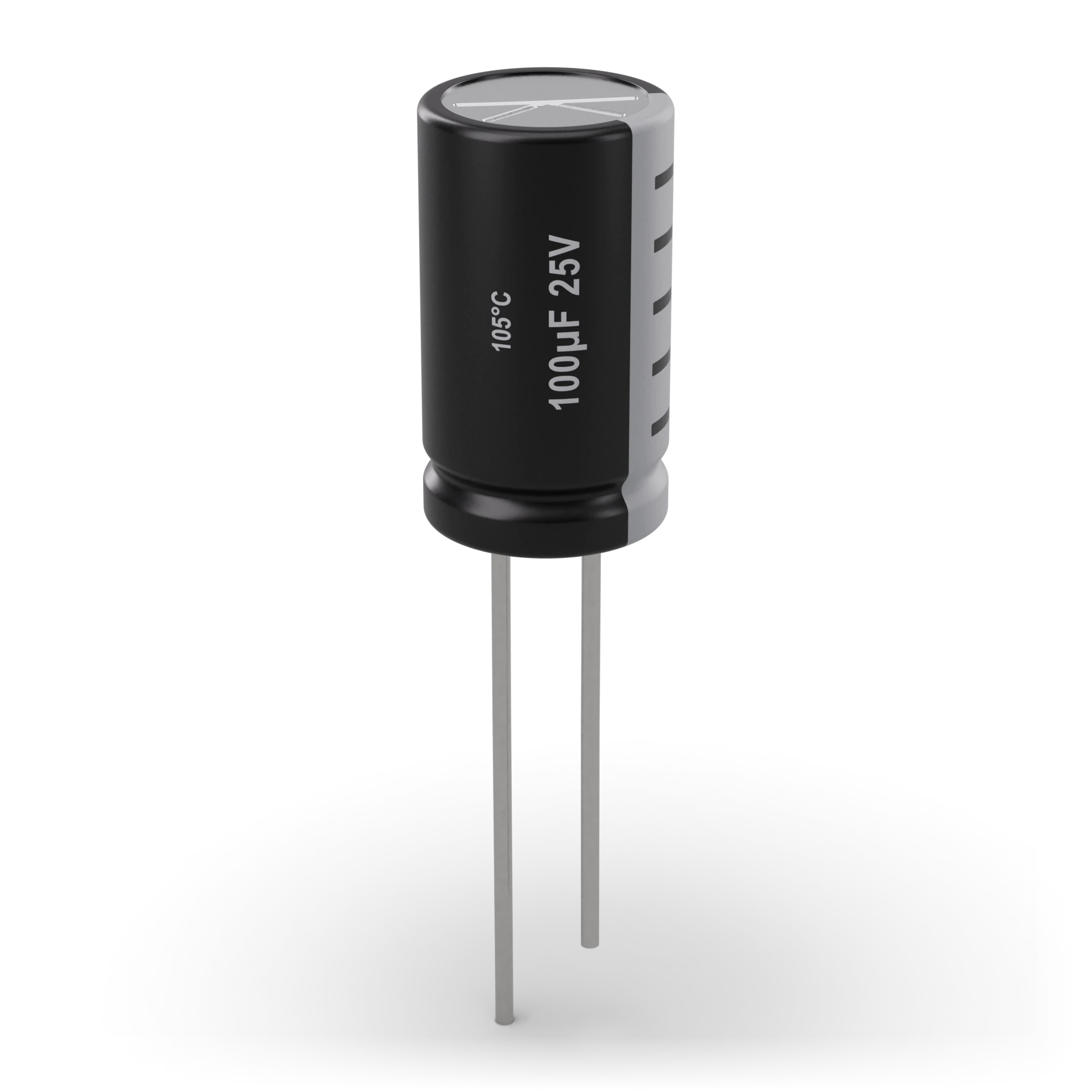
Safety notch (aluminum cap)PVC sleeve · Ø 6.3 × 11 mmMinus (−) polarity stripePins: + long, − short
- 1Safety notch (aluminum cap)
- 2PVC sleeve · Ø 6.3 × 11 mm
- 3Minus (−) polarity stripe
- 4Pins: + long, − short
Cylindrical body, minus stripe and value text on the plastic sleeve, notch on top, two legs of different length
100 µF 25 V type ≈ 6.3 × 11 mm, lead spacing 2.5 mm
100 µF 25 V type ≈ 6.3 × 11 mm, lead spacing 2.5 mm
Aluminum electrolytic
In simple terms
What is this?
A small tank of electricity. It fills like a bucket and empties when needed.
What is it for?
Smooths the pulsating current from the adapter; the light does not flicker and the motor does not jerk.
Where do you see it?
Small cylinders inside a phone charger.
How do you spot it?
A cylindrical body with a minus stripe along the side and one longer leg.
Caution:
If it is fitted reversed it heats up and can burst; striped leg to minus.
Technical definition
A high-capacity capacitor using a thin oxide layer on aluminum foil as insulation. It has polarity: the negative pin is marked by a strip. Reverse connection or excess voltage may make it heat up and vent.
Capacitance100 µF
Voltage25 V
PolarityYes
Schematic symbol IEC and ANSI differ
IEC 60617: the drawing style used in Türkiye and Europe.
Pins 2
1Plus (+)Long leg+
2Minus (−)Short leg, striped side of the body−
Features typical
- Capacitance range
- 1 µF – 10 000 µF
- Voltage
- 6.3–450 V
- Tolerance
- ±20%
- Temperature class
- 85 °C · 105 °C
- Lifespan
- 1000–10 000 hours (at rated temperature)
- ESR
- High, rises when cold
- Example part
- 100 µF 25 V, 105 °C
Common mistakes
Fitting it backwardsThe striped leg goes to minus. A capacitor connected backwards heats up, bulges and can burst open at the notch on top.
Choosing the voltage right at the limitChoose a voltage rating well above circuit voltage: for a 12 V line, use at least 16 V, preferably 25 V.
Putting it in a hot placeLifespan shortens quickly with temperature. Don't place it right next to a regulator or power resistor.
Test with a multimeter
Test whether this part is good with the multimeter on the measurement screen.
Take a measurementWhere it is used
Power supply output filterRegulator input and outputBuffer on a motor and relay supplyLong time constant with 555
Related lessons