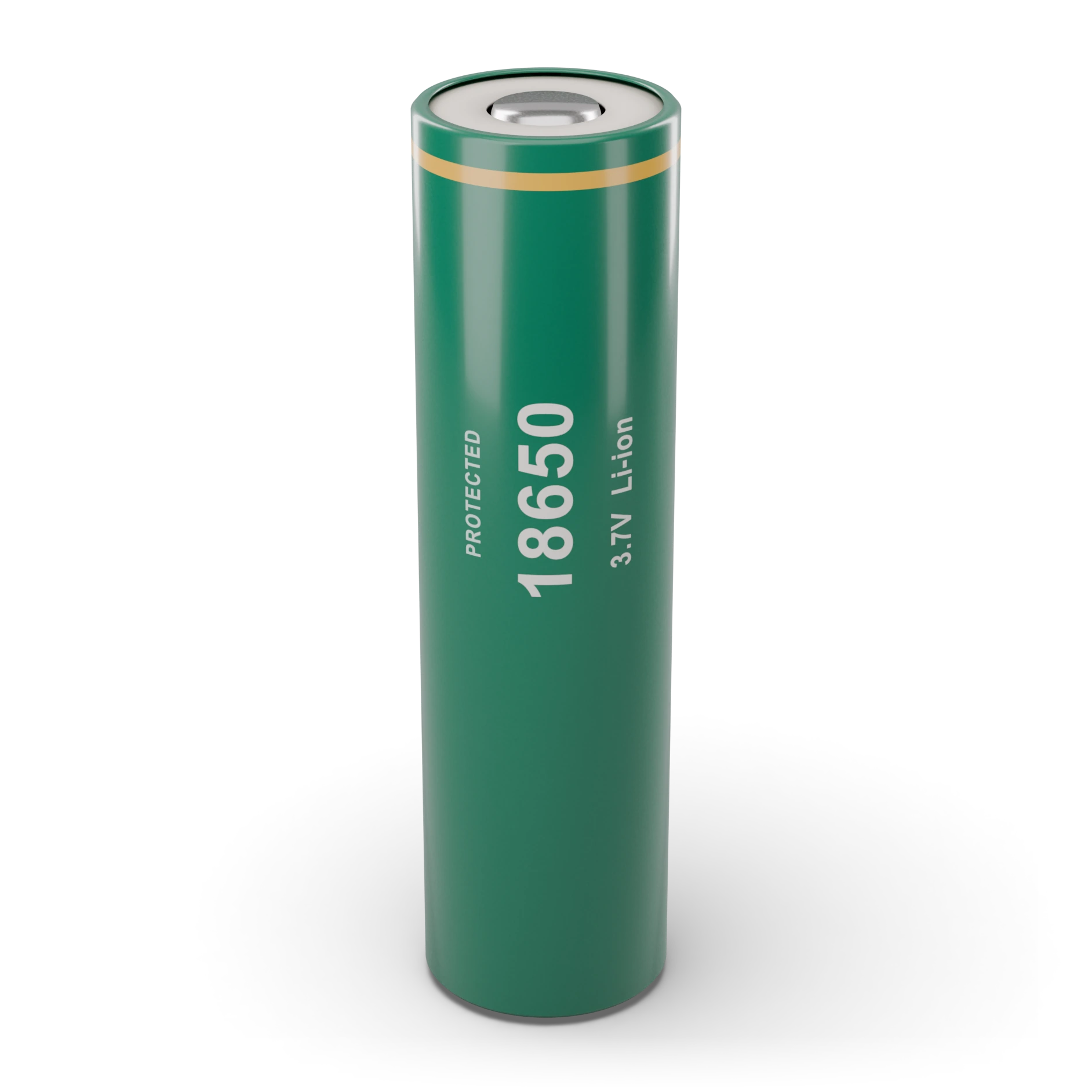
- 1Insulating ring
- 2+ terminal (button end)
- 3Li-ion cell 18650 (PVC sleeve) · Ø 18.5 × 69 mm (protected)
18 mm diameter × 65 mm long (shielded type slightly longer)
Li-ion cell (18650)
A strong rechargeable cylindrical battery; a big bucket of big energy.
Powers portable devices that need a lot of current, such as robots, flashlights and power banks.
Inside power banks, flashlights and laptop batteries.
A cylinder slightly thicker and longer than an AA battery; it has text on it and the plus end sticks out.
Overcharge, deep discharge and short circuit can start a fire; do not use without a protection circuit, do not crush.
A rechargeable cylindrical cell in which lithium ions move back and forth between two electrodes. The name 18650 comes from its dimensions: 18 mm diameter, 65 mm length. It stores a lot of energy; always use it with a protection circuit (BMS) against overcharge, over-discharge and short circuit.
IEC 60617: the drawing style used in Türkiye and Europe.
- Nominal voltage
- 3.6–3.7 V
- Fully charged
- 4.2 V
- Cutoff voltage
- 2.5–3.0 V
- Capacitance
- 1500–3500 mAh
- Charge
- CC/CV, up to 4.2 V (like the TP4056)
- Max. current
- Depends on the model; power cells 10 A and up
- Protection
- BMS required
- Example part
- Protected 18650 cell
Test with a multimeter
Test whether this part is good with the multimeter on the measurement screen.
Take a measurement