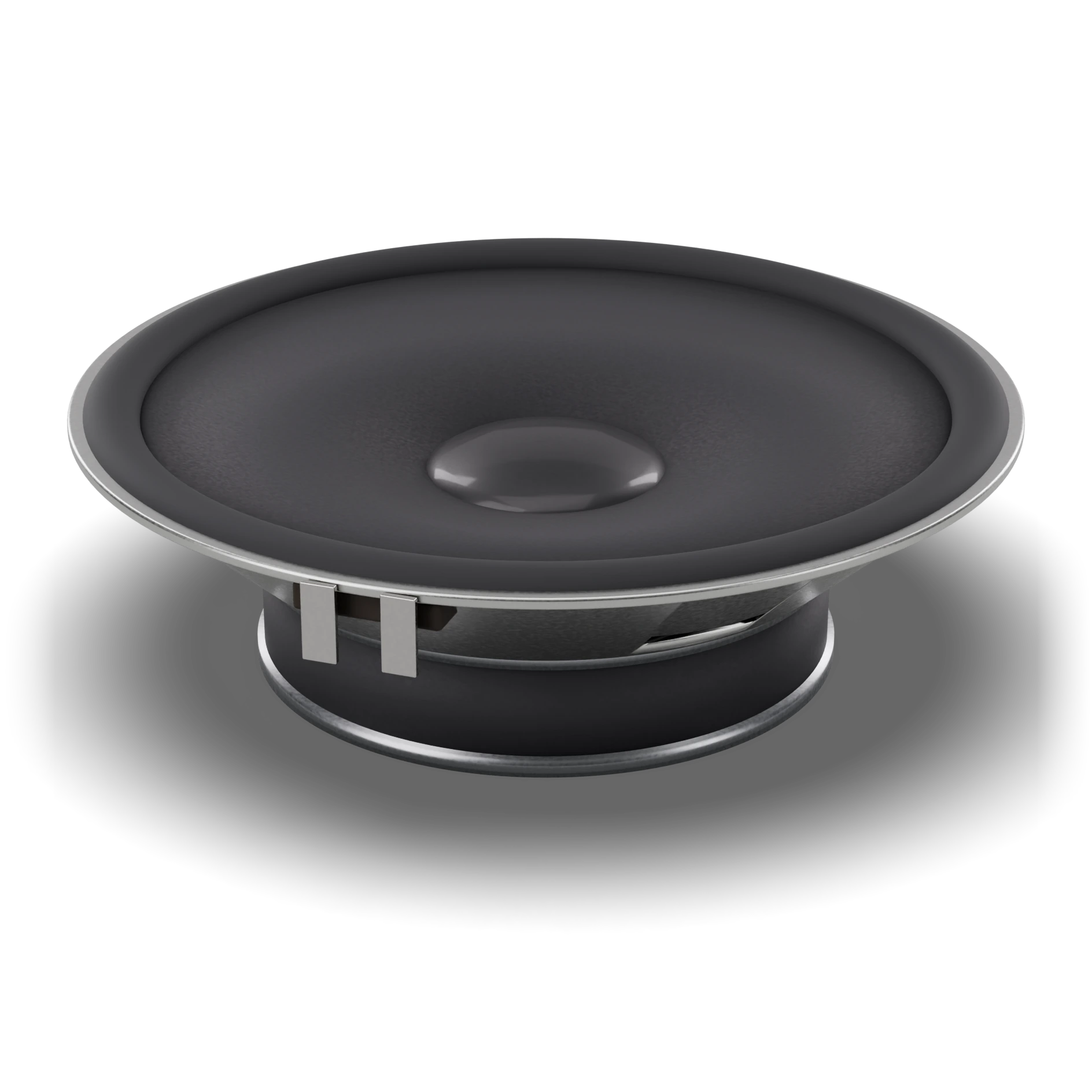
- 1Edge suspension (rubber)
- 2Cone (membrane) · makes sound by pushing air
- 3Dust cap
- 4Chassis (basket) · Ø 40 mm
- 5Solder terminals (+ red)
Small type ≈ 40 mm diameter; sizes vary widely
Speaker
A small transducer that shakes a diaphragm with a magnet and a coil and carries sound into the air.
Turns the electrical signal into sound waves; music and speech become audible.
Phones, televisions and Bluetooth speakers.
A round cone with a frame around it and a magnet behind it; two terminals.
Do not drive it straight from a pin; use an amplifier (amp) and turn the sound up slowly.
A transducer in which an audio signal passing through a coil in a magnet’s field pushes the coil and the cone attached to it back and forth. The cone vibrates the air and sound is produced. Its impedance is low, so it is driven by an amplifier.
IEC 60617: the drawing style used in Türkiye and Europe.
- Impedance
- 4 Ω · 8 Ω
- Power
- 0.25–3 W (small types)
- Driving
- Audio amplifier (e.g. LM386)
- Polarity
- Sets the phase; irrelevant with a single speaker
- Example part
- 8 Ω 0.5 W, 40 mm
Test with a multimeter
Test whether this part is good with the multimeter on the measurement screen.
Take a measurement