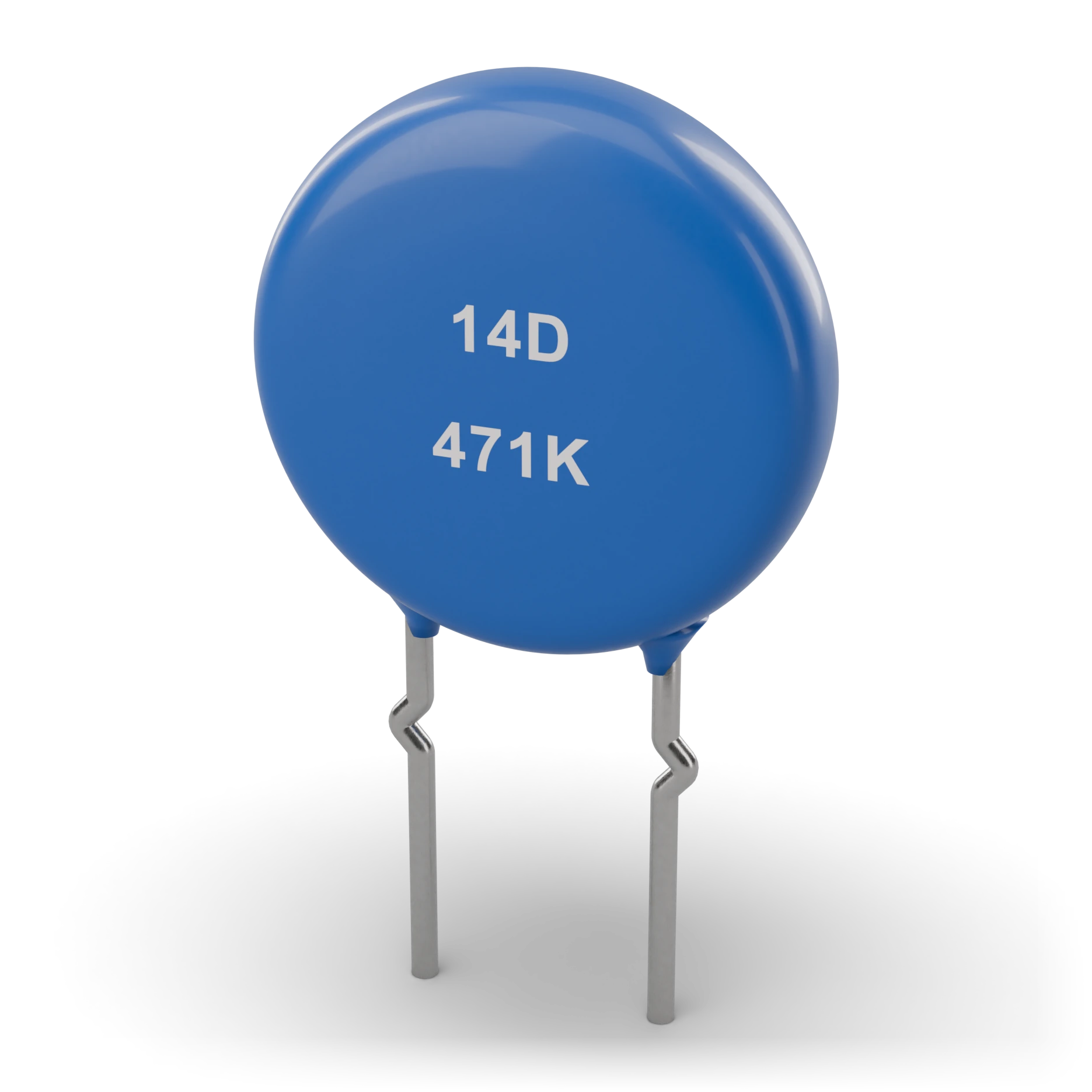
- 1Epoxy coating · 14D471K: Ø 14 mm, 470 V
- 214D471K marking
- 3Bent pins · 7.5 mm spacing
14 mm diameter disc, lead spacing 7.5 mm
Varistor
A safety gate that is normally closed and opens when the voltage suddenly rises.
Draws a sudden voltage spike onto itself; protects the device behind it.
Inside power strips and extension cords; it protects the wires from too much current.
A round, flat disc and two legs; the voltage code is printed on it.
Do not leave it on its own, put a fuse in front of it; do not experiment on the mains.
A part that passes almost no current at normal voltage but whose resistance drops suddenly once the voltage exceeds a threshold. It draws a sudden surge on the line onto itself, protecting the circuit behind it. It is made from zinc oxide ceramic.
IEC 60617: the drawing style used in Türkiye and Europe.
- Varistor voltage
- 470 V (at 1 mA)
- Tolerance
- ±10% (K)
- Max. continuous AC
- 300 V
- Max. continuous DC
- 385 V
- Material
- Zinc oxide (ZnO)
- Warning
- Mains voltage is outside this app's scope
- Example part
- 14D471K (mains type)
Test with a multimeter
Test whether this part is good with the multimeter on the measurement screen.
Take a measurement