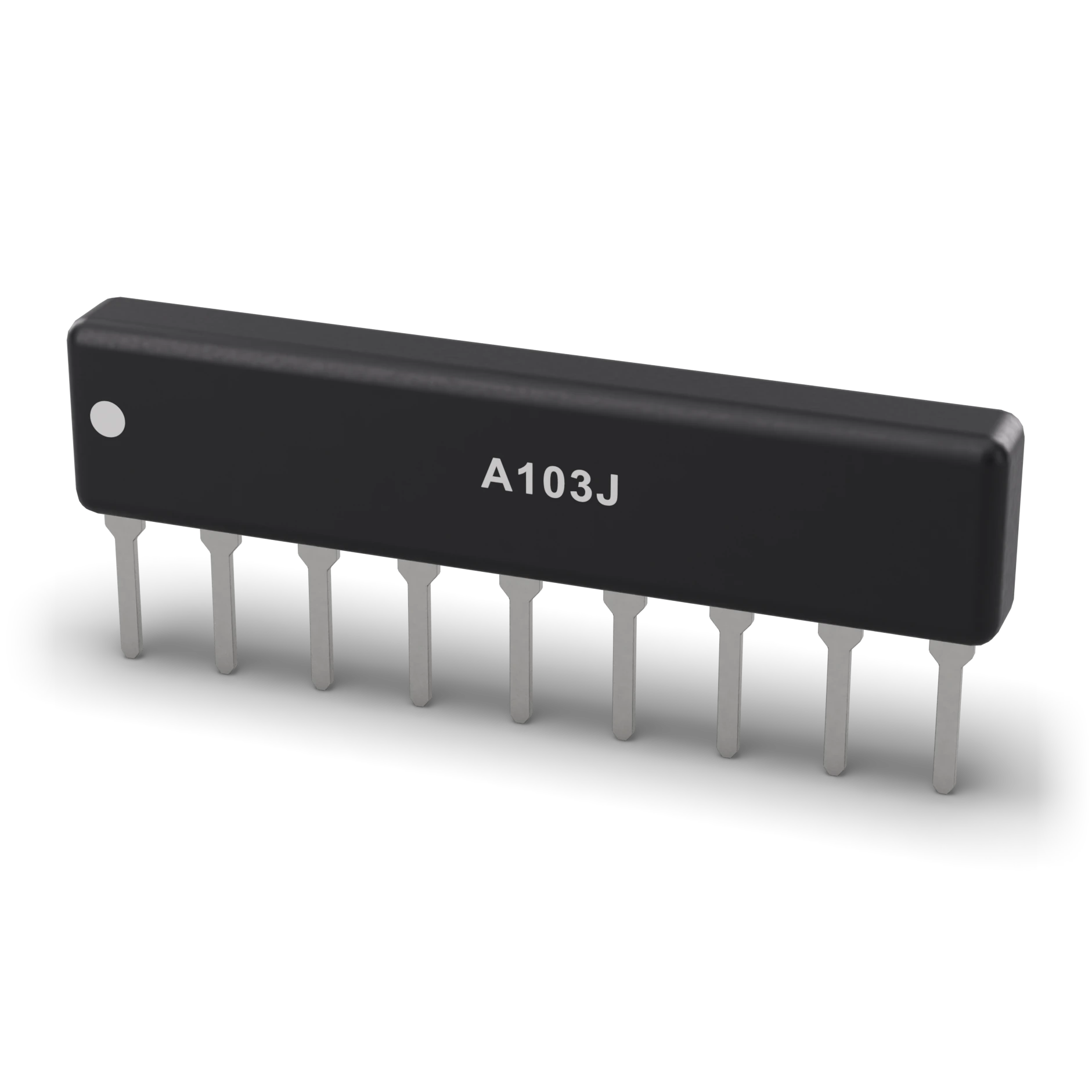
- 1Pin 1 dot (common)
- 2Epoxy coating · A103J: 8 × 10 kΩ
- 39 pins (1 = common end) · 2.54 mm spacing
Pin pitch 2.54 mm; the 9-pin type is ≈ 23 mm long · Example shown: A103J, 8 × 10 kΩ common-pin SIP-9
Resistor network (SIP)
A small strip that gathers a row of resistors of the same value into one body.
Connects the same resistor value to many input lines or LEDs in one go; less wire clutter.
On old computer and device boards, a small black strip with a single row of pins.
A thin black strip with a single row of legs; a dot or line at one end marks the common leg.
Don’t insert the common leg in reverse; set the direction by the dot or the line.
A single-in-line (SIP) package with several resistors of the same value in one body. In the common-pin type, one end of each resistor is joined, which makes it ideal for pull-ups. The common pin is marked with a dot or line on the body.
IEC 60617: the drawing style used in Türkiye and Europe.
- Number of resistors
- 8 (9-pin common type)
- Tolerance
- ±2%
- Power
- ≈0.2 W / resistor
- Pin pitch
- 2.54 mm
- Value code
- 103 = 10 kΩ
- Types
- Common pin · separate (isolated)
- Example part
- 4609X-101-103 (8 × 10 kΩ, common pin)
Test with a multimeter
Test whether this part is good with the multimeter on the measurement screen.
Take a measurement