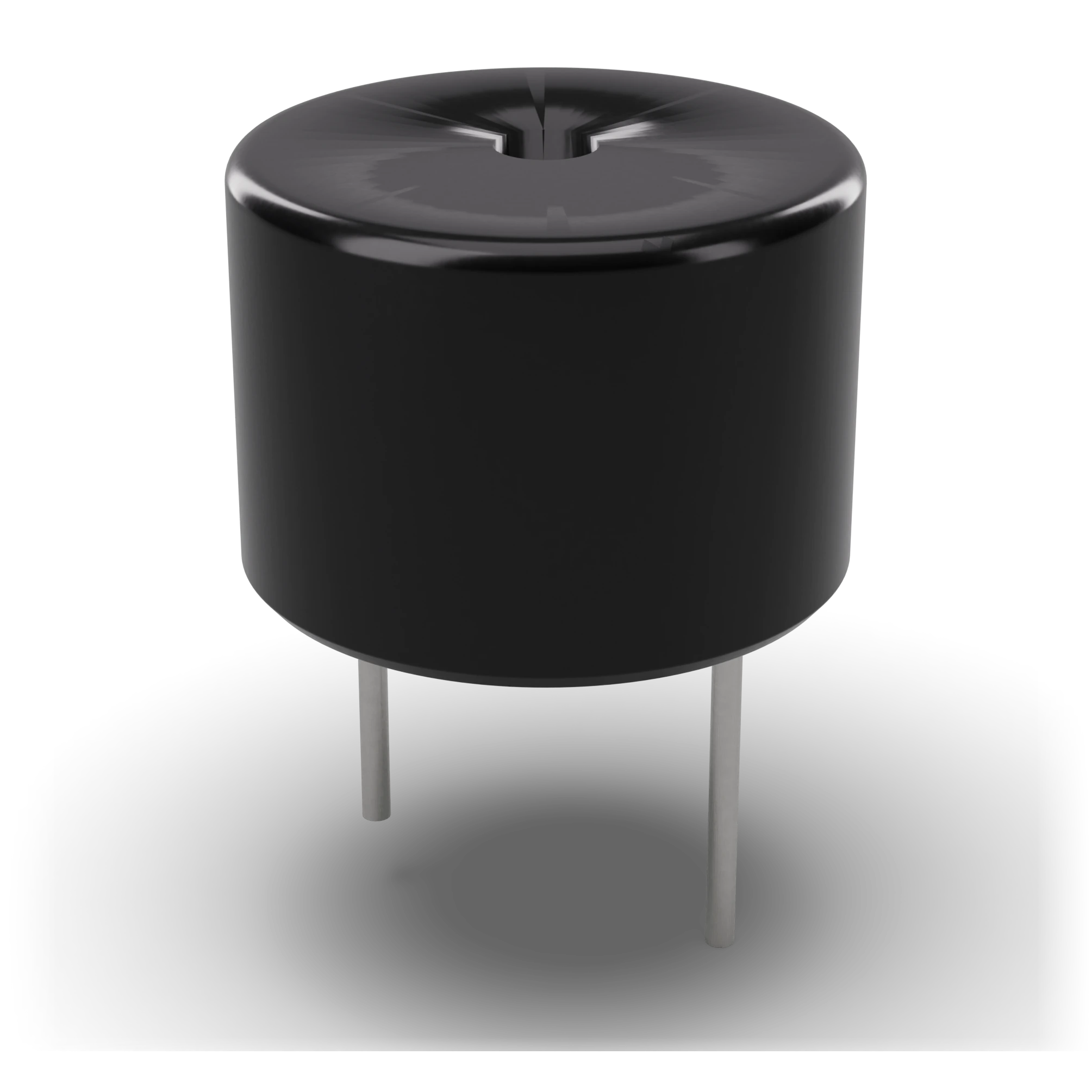
- 1Sound hole (open)
- 2+ mark
- 3Body · Ø 12 × 8.5 mm
- 4Pins (+ long) · 7.6 mm spacing
≈ 12 mm diameter; a bit lower than the active type
Passive buzzer
A small membrane with no sound of its own that turns incoming vibration into sound. Like a drum; you provide the rhythm.
Plays different notes when you send different frequencies; you can make a melody.
In toys and cards that play a tune.
A cylinder similar to an active buzzer; look underneath and you see a light green board, and one pin has a plus sign.
Connect it straight to a battery and you only hear a click; give it a changing signal instead.
A buzzer with no oscillator of its own that turns the incoming signal into sound. Give it DC and you hear only a click; give it a square wave and it sounds at that frequency. This way it can play different notes and melodies.
IEC 60617: the drawing style used in Türkiye and Europe.
- Driving
- Square wave / PWM
- Resonance
- ≈2–4 kHz (depends on model); loudest here
- Voltage
- 3–5 V
- Type
- Electromagnetic or piezo
- Example part
- 12 mm passive buzzer (green board on the underside)
Test with a multimeter
Test whether this part is good with the multimeter on the measurement screen.
Take a measurement