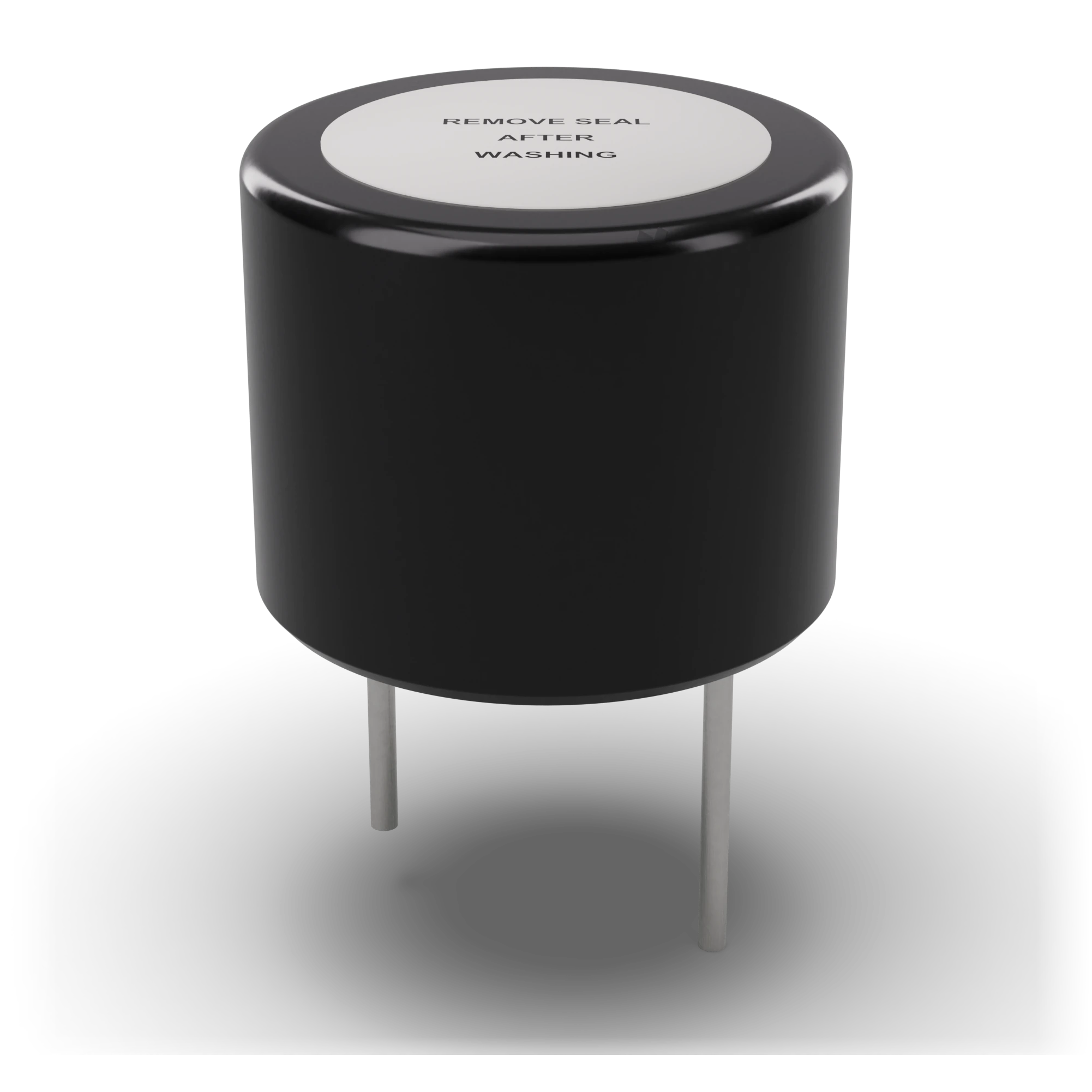
- 1Wash label (over the sound hole)
- 2+ mark
- 3Body · Ø 12 × 9.5 mm
- 4Pins (+ long) · 7.6 mm spacing
≈ 12 mm diameter × 9.5 mm high
Active buzzer
A small alarm with its own sound maker inside. Give it electricity and it always beeps with the same sound.
Gives a single-tone beep when voltage is applied; for alarms and confirmation sounds.
Alarm clock, the end-of-cycle beep of a microwave oven.
A cylindrical black body with a sound hole on top; the plus leg is marked.
Connect plus and minus correctly; do not confuse it with a passive buzzer, which shows a light green board underneath.
An audible alert that carries its own oscillator circuit inside. It sounds at a fixed tone as soon as DC voltage is applied to its terminals in the right direction. Its tone can't be changed; beep rhythms are made by switching it on and off.
IEC 60617: the drawing style used in Türkiye and Europe.
- Rated voltage
- 5 V (3 V and 12 V types also exist)
- Current
- ≤ 30 mA
- Audio frequency
- ≈2.3 kHz
- Volume
- ≈85 dB (10 cm)
- Polarity
- Yes
- Example part
- 12 mm 5 V active buzzer
Test with a multimeter
Test whether this part is good with the multimeter on the measurement screen.
Take a measurement