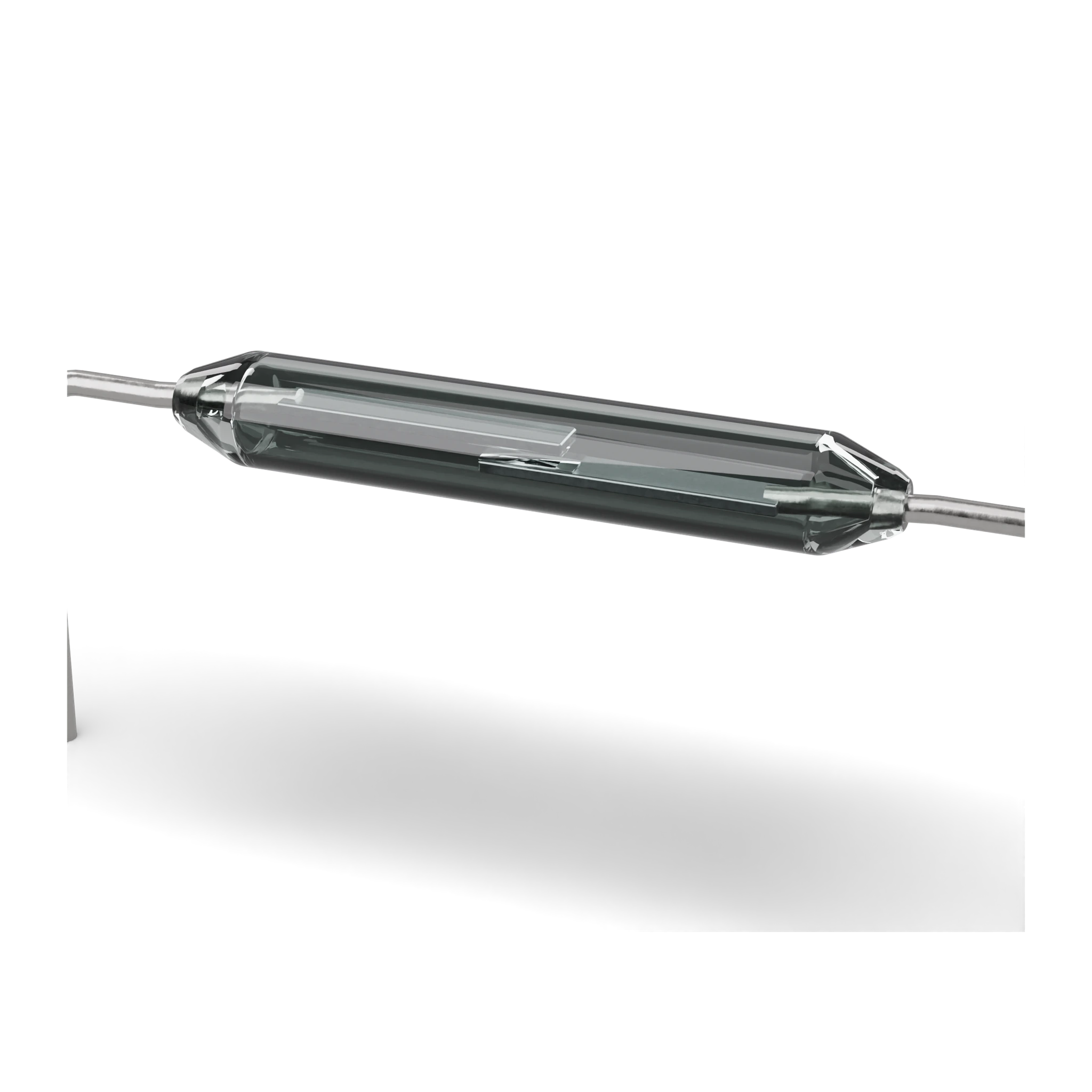
PinsFerromagnetic reeds (Ni-Fe)Glass tube (hermetic) · Ø 2.2 × 14 mmGap ≈ 0.1 mm · enlarged in the drawing
- 1Pins
- 2Ferromagnetic reeds (Ni-Fe)
- 3Glass tube (hermetic) · Ø 2.2 × 14 mm
- 4Gap ≈ 0.1 mm · enlarged in the drawing
Thin clear glass tube with two metal reeds inside, legs coming out of both ends
Glass tube from a few mm to a few cm; axial leads
Glass tube from a few mm to a few cm; axial leads
Reed switch
In simple terms
What is this?
Two thin metal reeds inside a glass tube; they snap together when a magnet comes near.
What is it for?
Closes the circuit without touching the magnet; it is the core of a door-open sensor.
Where do you see it?
Door and window alarm sensors, bicycle speedometers.
How do you spot it?
Thin glass tube with one pin at each end.
Caution:
The glass tube breaks easily; do not bend the pins right at the base of the tube.
Technical definition
It consists of two ferromagnetic metal reeds very close together inside a glass tube. When a magnet comes near, the reeds become magnetized and stick together, closing the circuit. Because the contacts are in a sealed tube, it lasts a long time.
TypeNO (normally open)
TriggerMagnet
CurrentLow
Schematic symbol Same in IEC and ANSI
IEC 60617: the drawing style used in Türkiye and Europe.
Pins 2
1Pin 1Has no direction1
2Pin 2Has no direction2
Features typical
- Type
- SPST-NO (NC and SPDT types also exist)
- Contact
- Low current, signal level
- Body
- Glass, fragile
- Triggering
- Depends on the magnet’s direction and distance
- Lifespan
- No rubbing parts, many operations
Common mistakes
Bending a pin at the bodyThe glass tube is fragile. When bending a lead, hold it with pliers a few mm from the body.
Switching an inductive loadSmall contacts can weld from a relay coil or motor spark. Drive the load with a transistor and let the reed only carry the signal.
Test with a multimeter
Test whether this part is good with the multimeter on the measurement screen.
Take a measurementWhere it is used
Door and window alarm sensorBicycle speed counterFloat-type liquid level sensorLid-closed detection
Related lessons