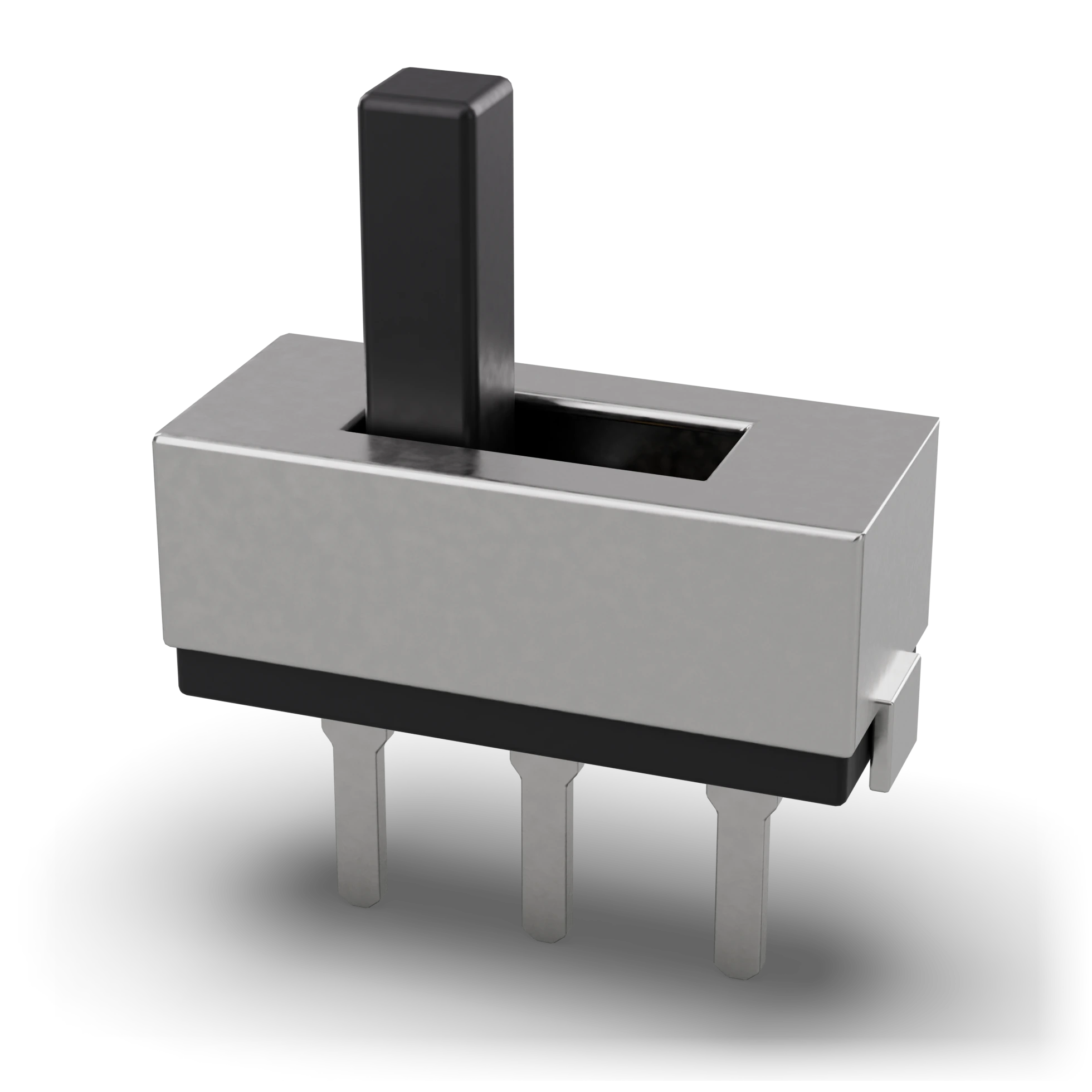
- 1Slider lever
- 2Metal cover
- 3Base
- 4Pins 1-2-3 (middle = common) · 2.54 mm spacing
Small body a few mm across, three pins in one row
Slide switch
A small switch that slides to pick one of two positions; like a sliding door.
Opens the circuit and keeps it open, or lets you choose one of two paths.
The on/off button of battery-powered toys and flashlights.
A small box with a plastic lever that slides sideways; three legs underneath.
The middle leg is the common one; it is built for small currents, so don’t run a big motor straight through it.
A switch whose lever slides between two positions and keeps its position. In the three-leg SPDT type, the middle leg connects to the leg on one side or the other depending on the lever position. Small types exist that plug directly into a breadboard.
IEC 60617: the drawing style used in Türkiye and Europe.
- Type
- SPDT (1 pole, 2 throws)
- Number of positions
- 2
- Current
- Low; signals and small loads
- Operation
- Latching (lever stays in place)
- Mounting
- Through-hole (THT) or SMD
- Example part
- SS12D00 (1 pole, 2 throws)
Test with a multimeter
Test whether this part is good with the multimeter on the measurement screen.
Take a measurement